Selecting the right heat exchangers manufacturer in the UAE is no longer just a procurement decision; it is a strategic investment in safety, operational efficiency, regulatory compliance, and long-term asset performance. With the UAE positioning itself as a global hub for oil & gas equipment, petrochemicals, power generation, and industrial manufacturing, buyers must evaluate suppliers against world-class technical and governance benchmarks.
This guide is designed for engineers, EPC contractors, procurement heads, and technical evaluators who demand more than price competitiveness; they demand precision, compliance, and longevity.
Why Does Manufacturer Selection Matter in the UAE Industrial Landscape?
Manufacturer selection matters in the UAE industrial landscape because projects operate under some of the world’s most stringent safety, quality, and regulatory frameworks. Equipment failures or non-compliance can lead to severe operational disruptions, financial penalties, and reputational risk.
A qualified manufacturer ensures compliance with UAE government regulations and international standards, and delivers long-term reliability, especially in high-risk sectors such as oil & gas, power, and heavy industry.
The UAE operates under stringent regulatory oversight driven by government authorities such as:
- Ministry of Industry and Advanced Technology (MoIAT)
- Abu Dhabi National Oil Company (ADNOC)
- Dubai Municipality
- Federal Authority for Nuclear Regulation (FANR)
These entities mandate strict adherence to ASME, TEMA, API, PED, and ISO standards, especially for pressure vessel manufacturers, heat exchanger manufacturers, and surge vessel manufacturers in the UAE.
A substandard supplier can expose your operation to:
- Regulatory non-compliance
- Unplanned shutdowns
- Safety incidents
- Costly retrofits and penalties
What Technical Capabilities Should a Heat Exchangers Manufacturer in the UAE Offer?
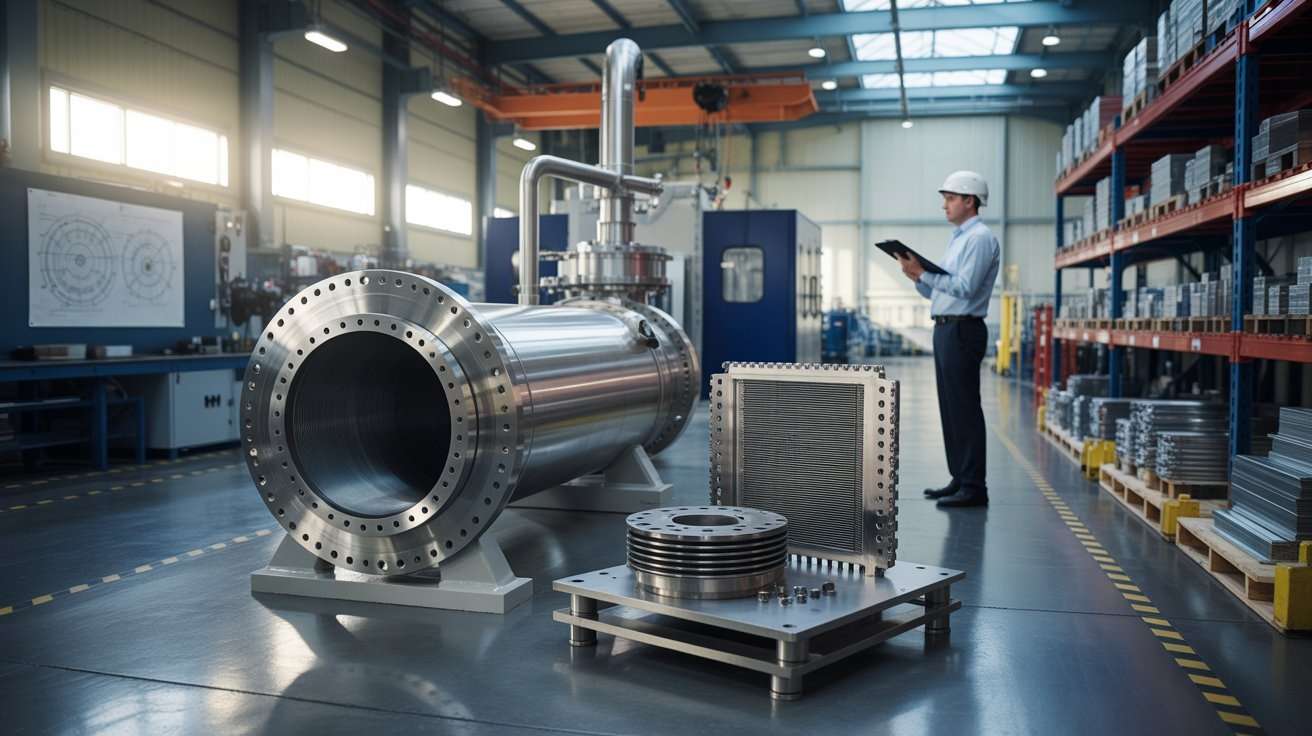
A heat exchangers manufacturer in the UAE should demonstrate advanced engineering depth, precision manufacturing, and strict compliance with international design codes. Core capabilities must include in-house thermal and mechanical design, adherence to ASME and TEMA standards, and the ability to engineer solutions for high-pressure, high-temperature, and corrosive service conditions.
Equally important are modern fabrication facilities, certified welding procedures, non-destructive testing, and full material traceability to meet UAE regulatory and oil & gas project requirements.
A credible heat exchangers manufacturer in UAE must design and fabricate equipment aligned with globally accepted standards, such as:
- ASME Section VIII for pressure containment
- TEMA Class R, C, or B, depending on application severity
- API 660 for refinery services
- ISO 9001, ISO 14001, and ISO 45001 certifications
These standards are commonly required by UAE government-led energy projects and ADNOC-approved vendor lists.
Manufacturers lacking these credentials often struggle to pass third-party inspections or EPC audits.
Advanced Fabrication and In-House Engineering Expertise
Top-tier manufacturers distinguish themselves through vertical integration, offering:
- In-house thermal and mechanical design
- Finite Element Analysis (FEA)
- Computational Fluid Dynamics (CFD)
- CNC machining and automated welding
- Non-destructive testing (RT, UT, PMI)
This level of capability is also expected from any static equipment or pressure vessel manufacturer in the UAE serving oil & gas or petrochemical clients.
How Important Is Industry Experience and Sector Specialization?
The UAE’s industrial ecosystem is predominantly driven by oil and gas equipment, large-scale power generation plants, desalination facilities, and complex downstream processing units, all of which demand highly engineered, regulation-compliant industrial equipment.
A manufacturer with sector-specific experience understands:
- High-pressure and high-temperature operations
- Corrosive and sour service environments
- Continuous-duty reliability expectations
- Emergency shutdown and safety integration
Experienced surge vessel manufacturing companies in the UAE and heat exchanger suppliers can anticipate operational challenges before they become failures.
Project Portfolio and Client References
Evaluate whether the manufacturer has supplied equipment for:
- Refineries
- LNG terminals
- Fertilizer plants
- Power and water utilities
- Offshore platforms
Manufacturers working on government-backed or ADNOC-approved projects are typically vetted against federal industrial compliance frameworks.
What Role Do Quality Assurance and Government Compliance Play?
A reliable heat exchangers manufacturer in UAE must support inspections from:
- Bureau Veritas
- Lloyd’s Register
- TÜV
- DNV
- ADNOC-approved inspection agencies
Full material traceability, mill test certificates, and weld procedure qualifications are mandatory under UAE industrial governance norms.
Alignment With UAE Industrial and Localization Policies
The UAE government actively promotes local manufacturing excellence through strategic initiatives led by the Ministry of Industry and Advanced Technology (MoIAT), including the ambitious “Operation 300bn” strategy aimed at strengthening industrial self-sufficiency and global competitiveness.
Manufacturers aligned with these policies demonstrate:
- Local value addition
- Skilled workforce development
- Long-term industrial sustainability
Such alignment adds credibility, especially for public-sector and energy-sector procurement.
How Do After-Sales Support and Lifecycle Services Impact Long-Term Value?
After-sales support and lifecycle services play a critical role in preserving long-term asset value by ensuring consistent performance, safety, and regulatory compliance throughout the equipment’s operational life.
In capital-intensive UAE industries such as oil, gas, and power, strong lifecycle support directly translates into lower total cost of ownership and improved operational continuity. The best manufacturers extend beyond fabrication to provide:
- On-site installation guidance
- Commissioning support
- Performance testing
- Maintenance manuals and training
This is particularly critical for pressure vessels manufacturer in the UAE and heat exchanger systems operating under continuous loads.
Spare Parts Availability and Long-Term Service Commitment
Manufacturers with local presence ensure:
- Faster spare part availability
- Reduced downtime
- Technical support aligned with UAE time zones and site conditions
In high-capital projects, lifecycle support often outweighs initial procurement cost.
Conclusion: Choosing Excellence Over Convenience
Selecting the right Heat Exchangers Manufacturer in the UAE requires a balanced evaluation of technical excellence, regulatory compliance, industry experience, and long-term service reliability.
For industries operating under the UAE’s strict safety and quality frameworks, partnering with a manufacturer that aligns with government standards, international codes, and operational realities is not just advisable; it is essential.
A well-chosen manufacturer becomes a long-term strategic partner, safeguarding performance, compliance, and operational continuity for decades.
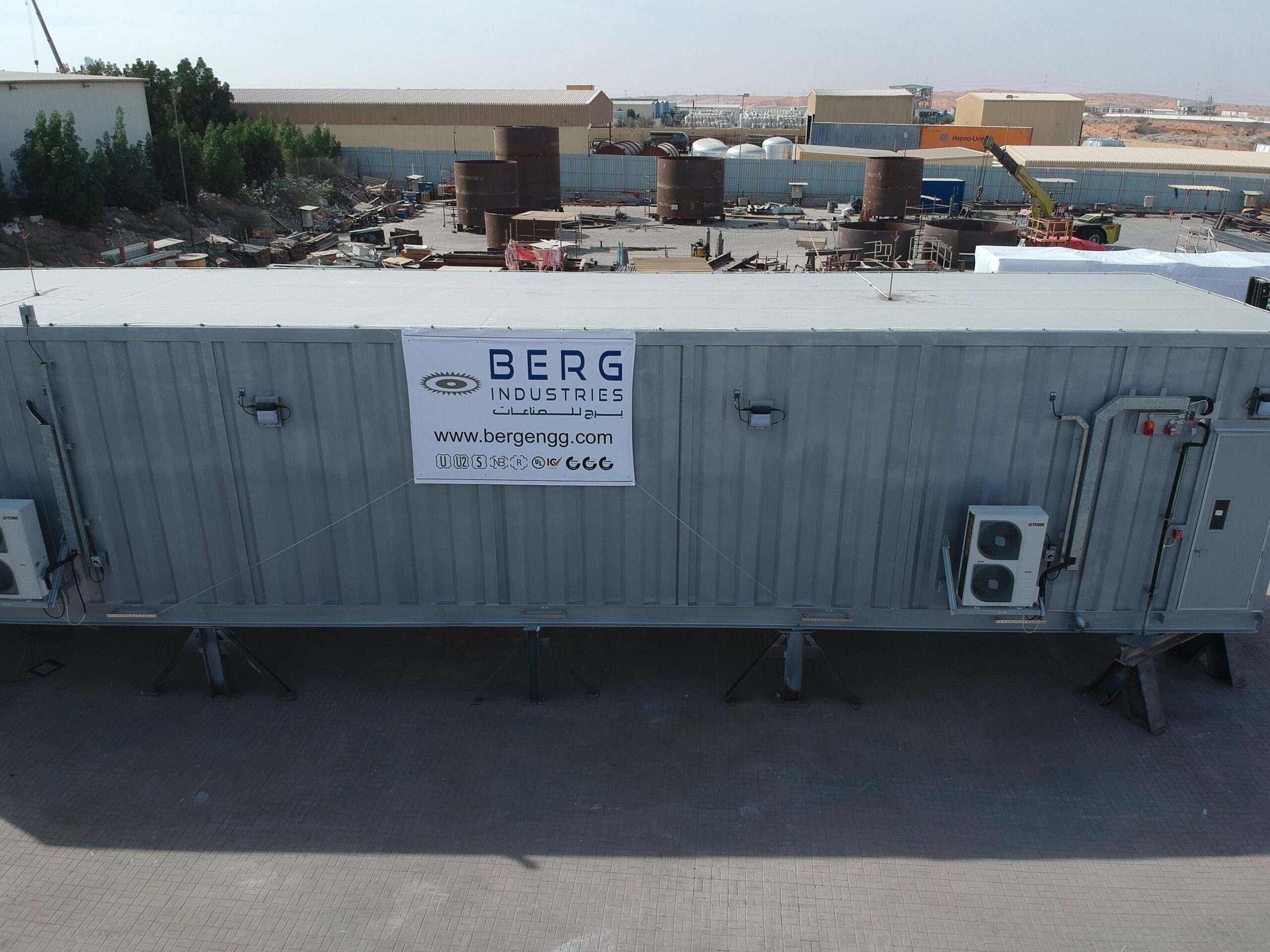
Partner with BERG Industries for precision-engineered heat exchangers and static equipment designed to meet the UAE’s most demanding industrial standards. With advanced manufacturing capabilities, strict code compliance, and end-to-end lifecycle support.
FAQs
Can a static equipment manufacturer also produce heat exchangers?
Yes, provided the manufacturer has specialized thermal design expertise, TEMA compliance, and fabrication capabilities required for heat exchangers beyond standard static equipment manufacturing.
What industries most commonly require pressure vessels manufacturer in UAE?
Oil & gas, petrochemicals, power generation, desalination, and fertilizer industries rely heavily on pressure vessels designed to withstand extreme pressure and temperature conditions.
Are surge vessel manufacturing companies in the UAE regulated?
Yes. Surge vessels must comply with ASME and API standards and UAE safety regulations, with mandatory third-party inspections and traceable documentation.