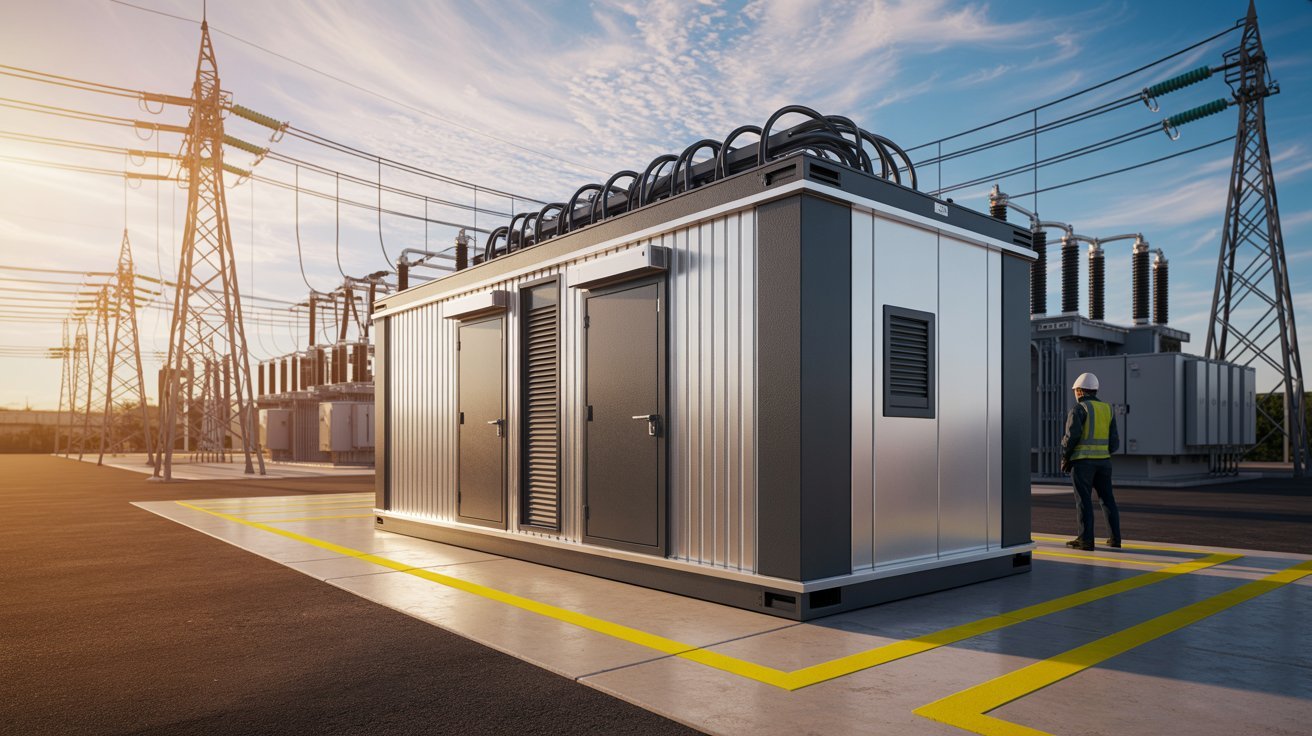
Infrastructure for industrial use is being constructed around a fundamental concept: flexibility without compromise. As the demands for energy increase and project deadlines get shorter, the old method of building electrical rooms on site from scratch is transforming into technology that is faster, more intelligent and a lot more reliable.
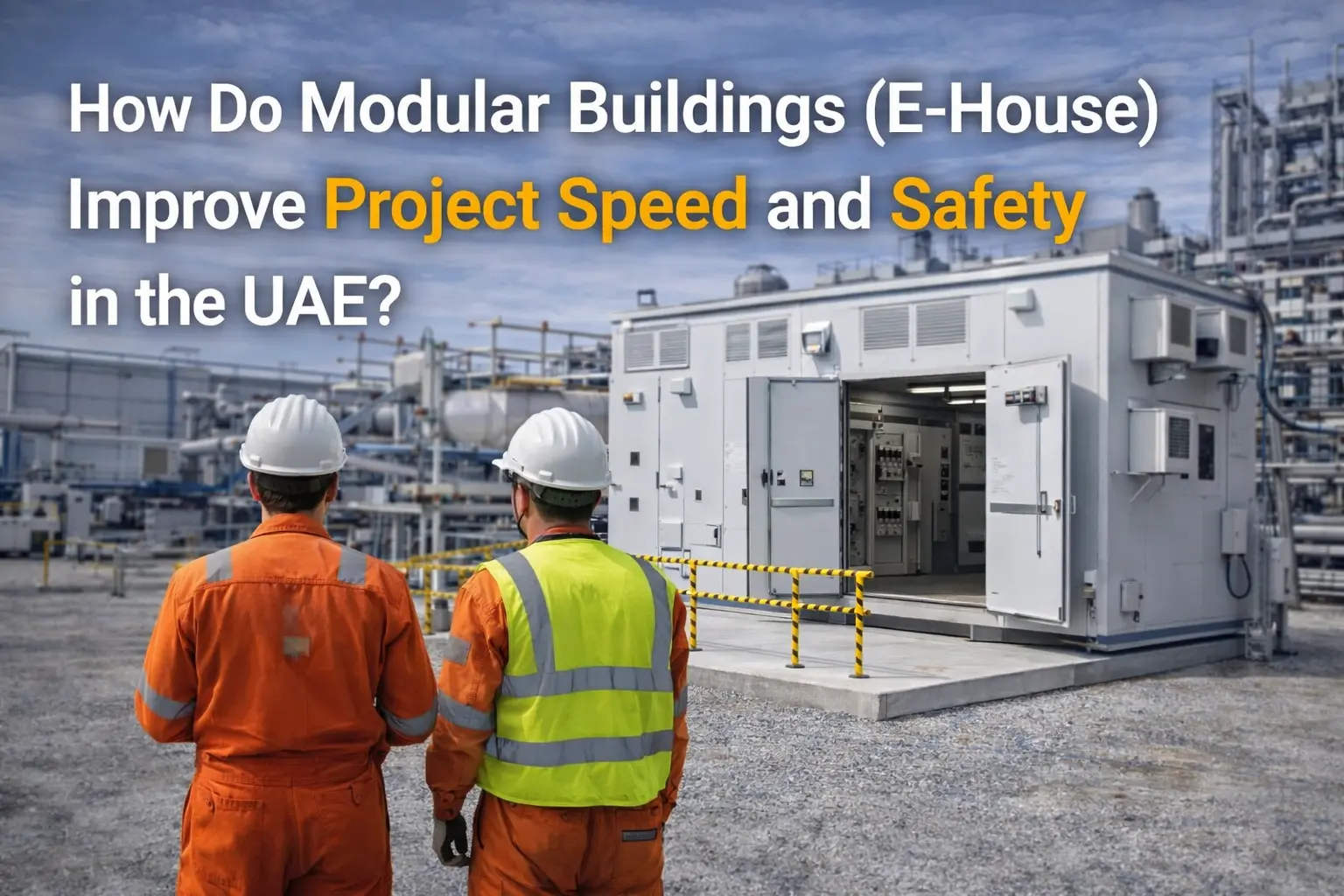
Modular Tech Buildings (E House) have moved from small-scale applications to widespread industrial use across power generation as well as oil and gas mining, water treatment and massive-scale construction. Their rise reflects a broader shift in how engineers and project managers think about electrical infrastructure, not as something bolted together at the end of a project, but as a precision-manufactured component delivered ready to operate.
What Is Driving the Shift Toward Modular Electrical Infrastructure
In the past, constructing electrical control rooms on site was the norm. Nowadays, this practice carries known risks, including the exposure to weather during construction, inconsistent work between various site teams, long times for commissioning and control of quality once the materials are removed from the suppliers.
The answer is usually yes and the market for E-Houses/E-rooms has grown accordingly.
Precision Manufacturing in a Controlled Environment
The most significant benefit of modular electrical structures is that they’re constructed in the factory, not in the field. Every cable tray busbar, panel mount HVAC unit, as well as systems for fire prevention are built in a controlled environment with control of quality at each stage.
It is more important than initially. In a building site, electric installations are competing for space and crane time labor along with many other trades. Errors get made. Rework is required. Inspections get delayed.
In a specific manufacturing facility the electrical houses manufacturer oversees the entire manufacturing process, from structural fabrication the final factory acceptance test. The end result is a house that is on site, verified, tested and ready for installation.
The Structural Case for Modular Buildings
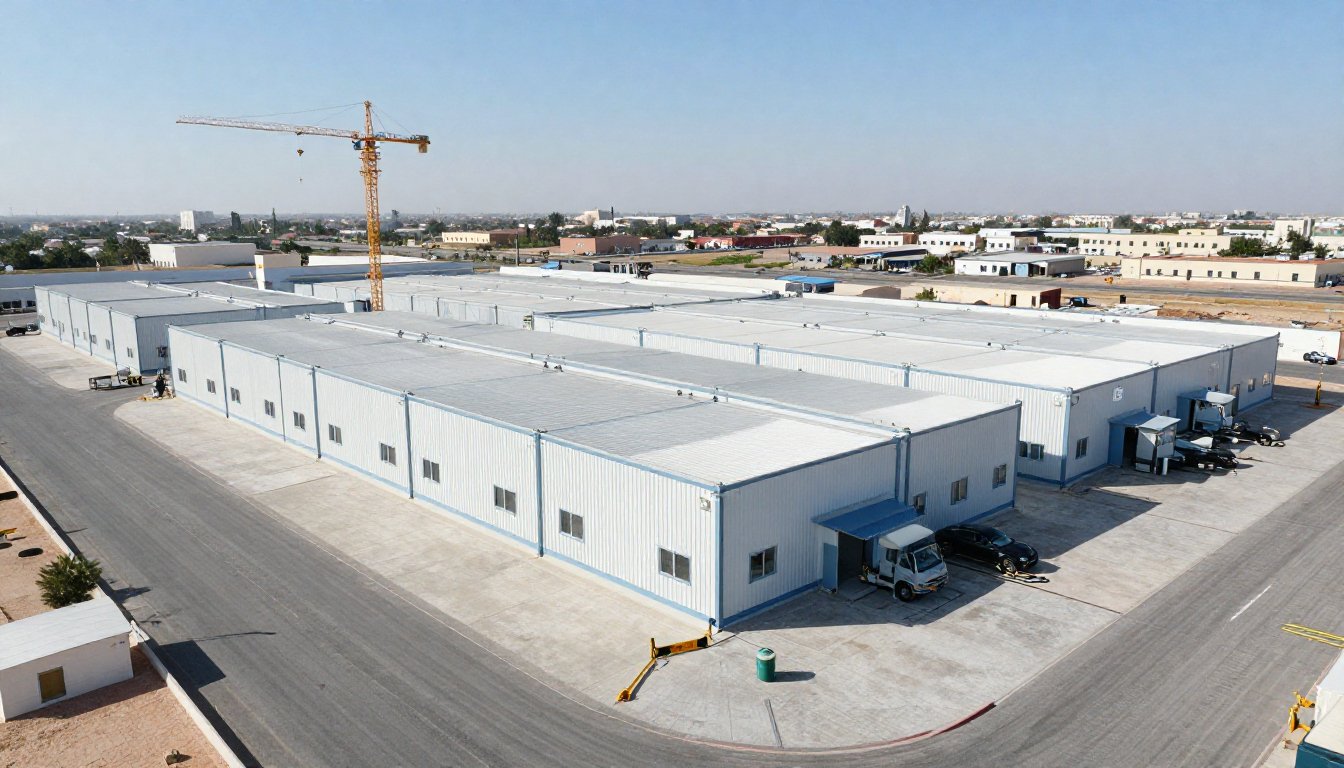
Beyond electrical performance The strength of the structure of modular electrical structures requires consideration. A carefully designed Modular Building Manufacturer in UAE doesn’t just modify it to a shipping container. The frame’s structure is engineered to withstand the rigors of electrical load and to withstand Gulf conditions, including extreme heat, humidity and sandstorm exposure. It is also designed to satisfy wind load and seismic requirements when necessary.
Frames made of galvanized steel, wall panels as well as raised flooring systems and pressurized HVAC setups are standard components on units that are well-specified. They are not a matter of flimsy ideas. They are designed from the very first drawing because the electrical equipment within relies on a stable and controlled climate to function properly and live up to its expected time.
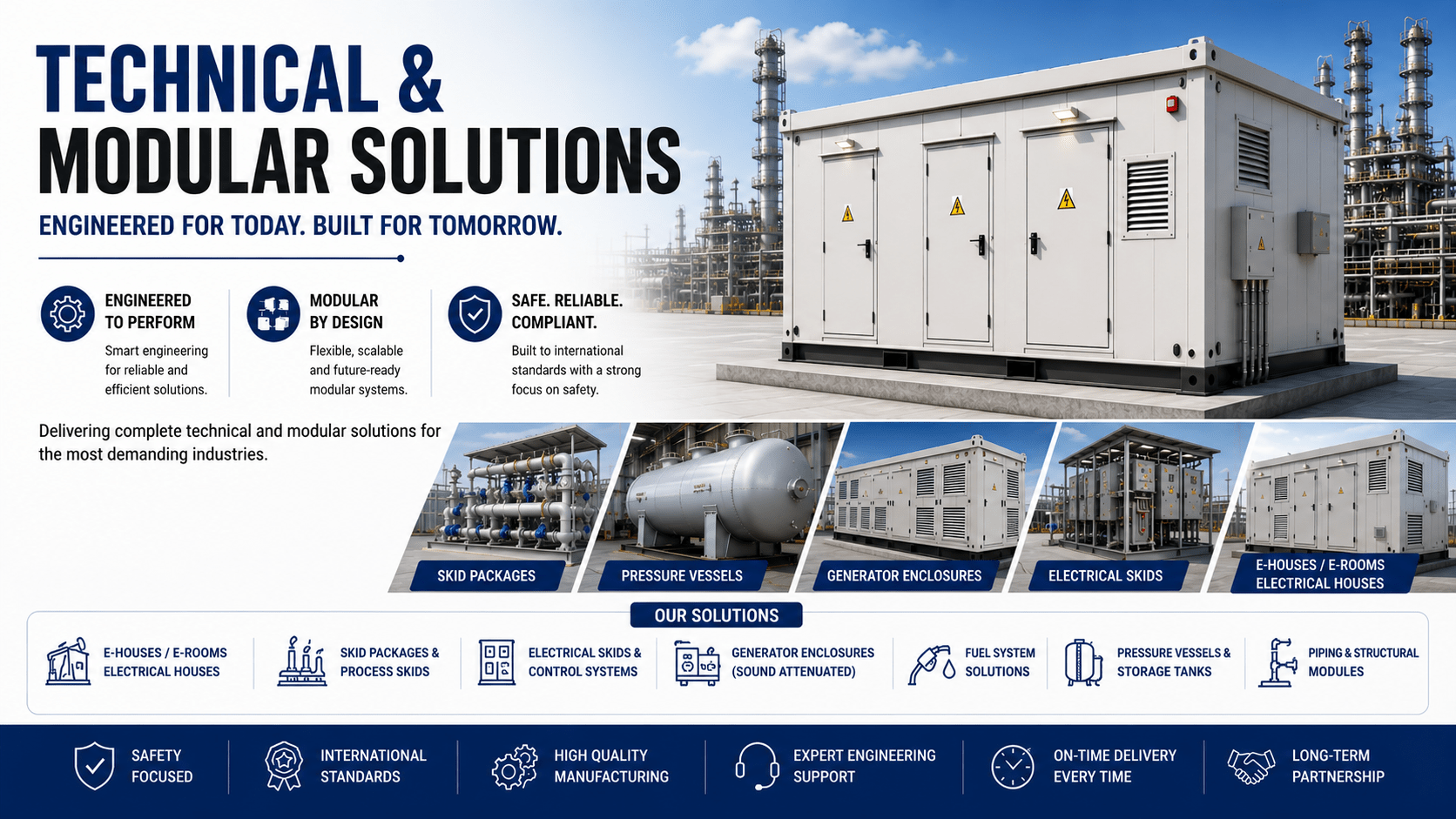
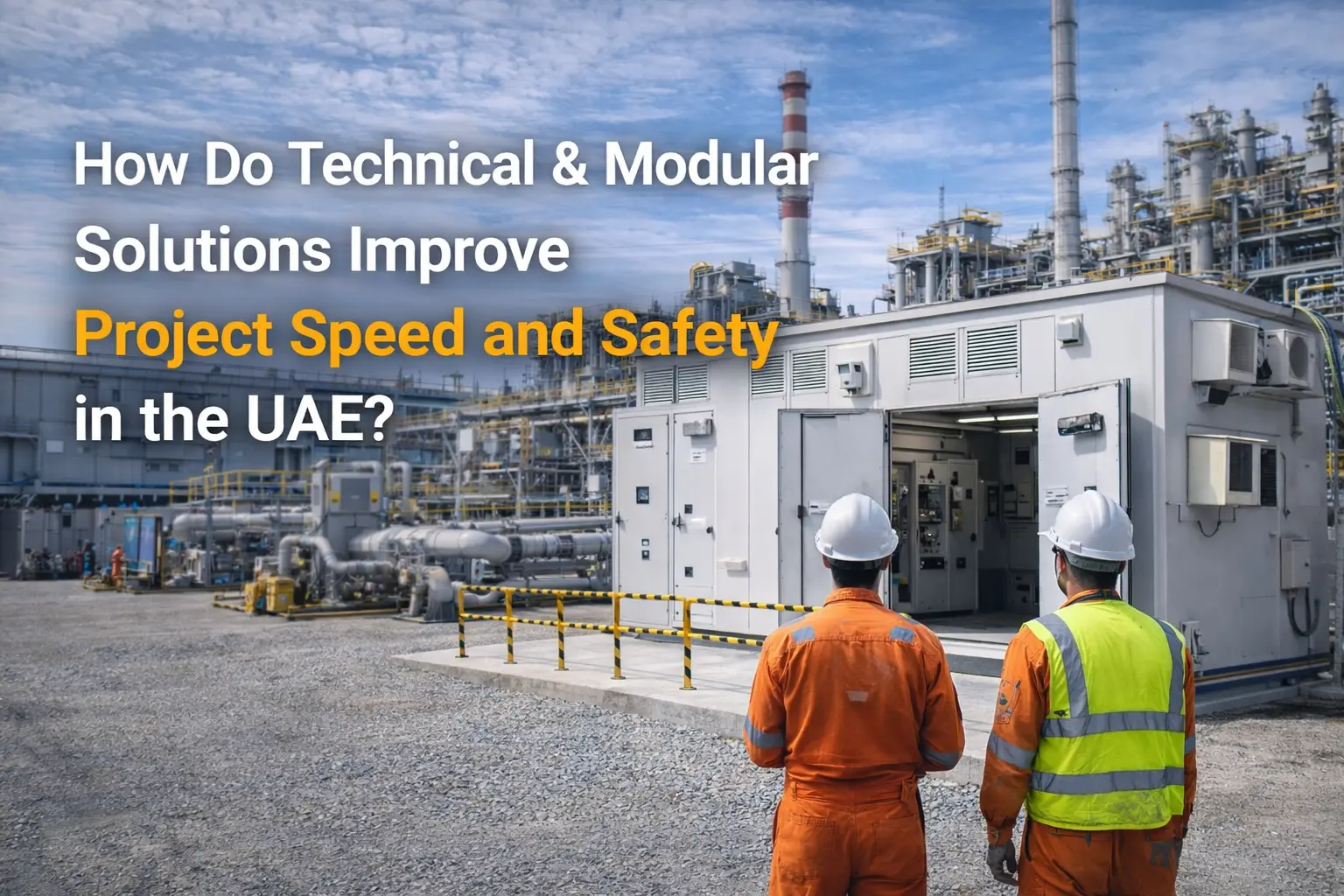
Technical and Modular Solutions like this are now incorporated directly into EPC contracts across the globe and show how widely the concept has been accepted by both project managers as well as engineering consultancies.
GIS Containers and Generator Enclosures
Two distinct areas within the larger modular electrical building market should be highlighted in their own way.
GIS Container Manufacturer UAE capabilities have increased substantially as gas-insulated switchgear has become the standard option for high-voltage distribution in urban and industrial areas with limited space. GIS containers house sophisticated high-voltage components in small, weatherproof enclosures that can be placed close to the center of load which reduces transmission losses and cable runs.
Generator Enclosures manufacturers UAE serve a parallel need. Prime and standby power generators require an acoustic system and weatherproofing, as well as ventilation management and secure energy storage. An appropriately designed generator enclosure isn’t just an enclosure around the engine. It’s a system built around the generator’s operational requirements and access requirements to services, and compliance with environmental regulations.
Overheating, acoustic incompatibility, as well as restricted access to service are all common issues in enclosures that were designed as fabrication tasks instead of engineering ones.
Deployment Flexibility Across Industries
One of the strongest arguments in favor of Modular Technology Buildings (E HOUSE) is their flexibility in deployment. A single electrical design of building can be altered, with small modifications, to be used for the construction of a gas compression facility in the desert or water treatment plant close to the coast or a substation in an urban area or an interim power hub on the construction site.
This ability to adapt reduces engineering lead times for repeated projects and allows companies that manufacture with modular skills to provide services to clients in multiple industries without having to start from scratch every time.
This Gulf area’s infrastructure pipeline investments, that includes desalination, power generation industrial city development, as well as renewable energy sources, is a major benefit for project managers and contractors with multiple projects concurrently.
Bottom Line
The world of industrialization is moving towards infrastructure that is designed at once, properly constructed and quickly deployed. Modular Technology Buildings (E House), GIS containers Generator enclosures, as well as the related Technical and Modular Solutions reflect that trend across all major industries in the UAE as well as the larger Gulf region.
For project managers and EPC contractors seeking an industrial partner that has the expertise in engineering to back each deliverable, Berg Industries the top Electrical Houses Manufacturer offers proven capabilities across all modular electrical construction requirements. Connect now.
Frequently Asked Questions
2. What does an electrical modular building compare to conventional construction on-site?
Modular structures are built in factory conditions that are controlled to ensure consistency in quality and allow parallel fabrication as the civil works are on-site. This reduces the timeframes for construction, minimizes delays caused by weather and provides a pre-commissioned structure instead of one that requires full-on-site commissioning.
3. Which industries use E-House or modular electrical structures the most?
Power and oil generation wastewater and water treatment, the mining industry, sustainable energy and construction of large scales all depend in large part on electrical modular constructions. Any industry that requires strong, relocatable, or easily deployable electrical infrastructures benefits from this model.
4. What is a GIS container? And where can it be employed?
A GIS container is a gas-insulated switchgear housed in an incredibly compact and weatherproof enclosure that is suitable for distribution of high voltage. It is employed in spaces-constrained substations and urban power networks as well as offshore platforms as well as industrial installations where traditional installation of air-insulated switchgear is not feasible.
5. What are the most important things buyers should be looking for in an enclosure manufacturer?
Buyers must consider the acoustic attenuation rating in addition to ventilation engineering, service access design, weatherproofing requirements and the ability to integrate fuel systems. A reliable Electrical Houses Manufacturer will treat an enclosure in terms of a complete system built around the generator instead of a generic shell.