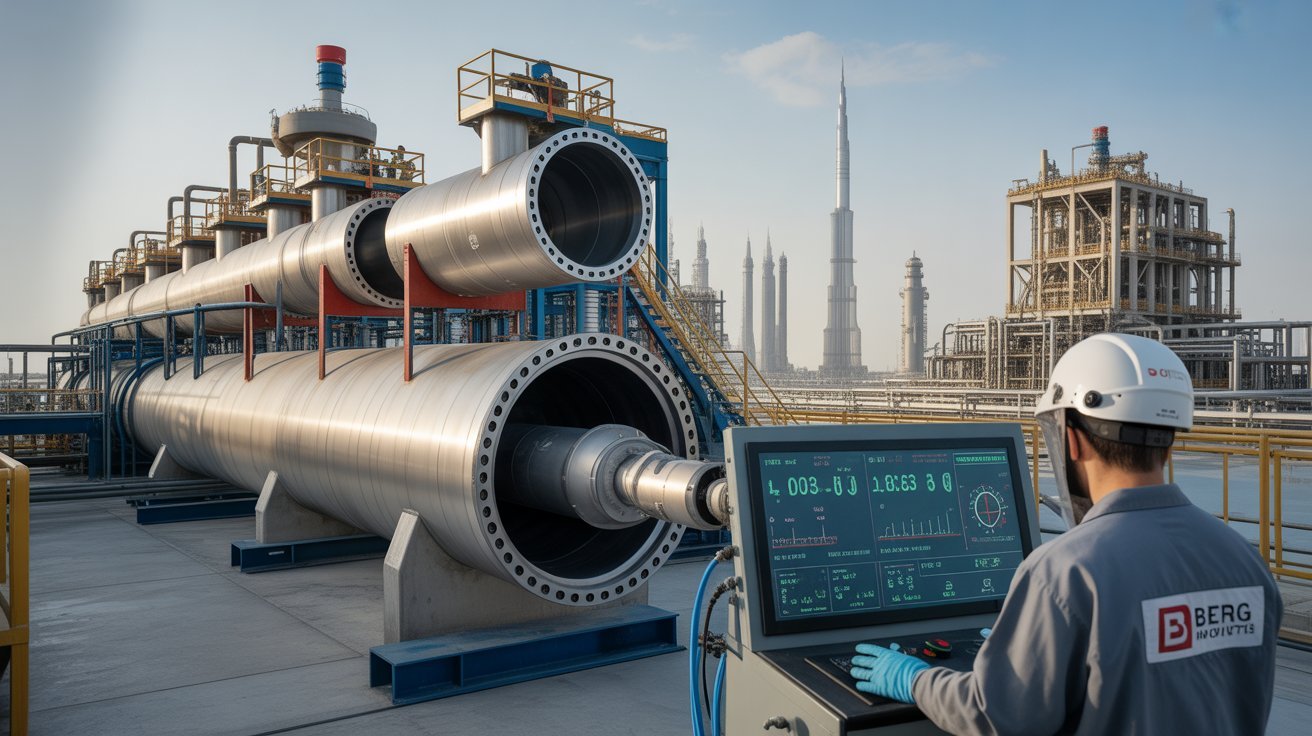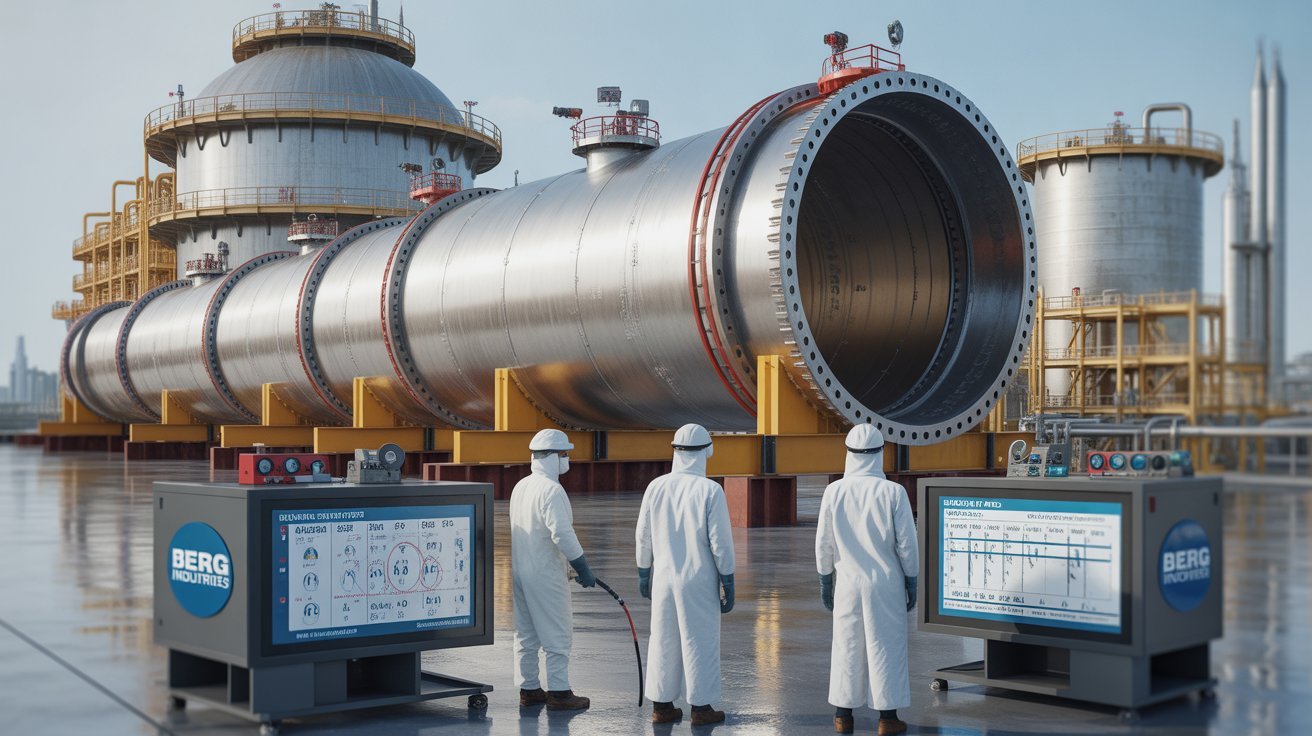
Have you ever heard a pipeline bang right after a pump trip, then watched gauges swing like a pendulum? If you run water, cooling, fire, or process lines, you cannot treat surge control as an afterthought. You need vendors who build for real operating shocks, not brochure duty.
That is why surge vessels manufacturing companies in UAE stay on many shortlists for Dubai and even Beirut-led procurement teams.
Surge vessels sit quietly, yet they protect your network when flow changes in seconds. This guide explains how UAE manufacturers build surge vessels, what quality checks matter, which documents protect you, and how you can select the right vendor with fewer surprises later.
What “Good Manufacturing” Looks Like in Real Surge Duty
Surge vessels handle pressure transients from pump trips, fast valve closure, or sudden load change. So, the work starts with sizing, not welding.
Sizing First, Fabrication Next
A serious supplier asks for:
- Line size, length, elevation profile
- Pump curve, trip conditions, restart logic
- Valve closing time and control logic
- Allowable max and min pressure limits
Then they choose the right type:
- Air-over-water tanks for broad utility use
- Bladder-type vessels are used when you want less air loss and better separation
- Compressor-supported setups for long networks and repeated events
After that, they lock nozzle sizes, vent and drain points, and instrument taps. Also, they plan access for inspection. Then, site commissioning becomes cleaner.
Materials, Corrosion, and Coating Planning
UAE projects face heat, coastal moisture, and mixed water quality. Beirut projects often face tight spaces and fast retrofits. UAE-linked projects often face salt air and shipping exposure. Because of that, coating and preservation matter as much as shell thickness.
So, ask for:
- Shell and nozzle material grade confirmation
- Internal lining or coating plan, if water quality demands it
- External paint system, blast profile, and DFT reports
- Packing and transport protection plan
This is also where buyers compare Static equipment manufacturers UAE because surge vessels often sit inside a wider static package scope, not as a single item.
Integration with Skids and Piping Tie-ins
Many surge systems ship as skids with valves, gauges, transmitters, safety devices, and control panels. Therefore, the vendor’s skid experience saves site work. In addition, it reduces the mismatch between vessel nozzles and piping routing.
At this stage, you also evaluate the pressure vessel fabrication UAE capability, because surge vessels still follow pressure equipment discipline: traceability, inspection, and test control.
How Surge Vessels Manufacturing Companies in the UAE Control Quality from Plate to Packing
Quality is not one final test. It is a chain of checks. So, you should look for a clear QCP and ITP, with hold points and sign-offs.
Welding Discipline and Inspection Flow
A credible yard controls:
- Approved WPS and PQR, plus welder qualification
- Fit-up checks, joint marking, and weld mapping
- Controlled repairs with re-inspection
Then NDT happens based on the datasheet and code basis:
- VT for all key welds
- RT or UT where required
- MPI or PT on critical areas and attachments
- Final visual and dimensional checks before testing
If a supplier skips weld maps or repairs without a log, you will feel it later. So, ask for the weld map early, not after fabrication.
Material Traceability that Survives Audits
Traceability is the backbone of acceptance. It matters even more when the owner, consultant, or insurer asks questions after commissioning.
You should expect:
- MTCs for pressure parts
- Heat number transfer and traceability list
- Marking and stamping control
- Third-party inspection coordination when asked
This is standard practice in Pressure vessel fabrication UAE, and you should not accept “we can share later” answers. Instead, demand an MDR index at the award stage.
Hydrotest, Drying, and Preservation
Hydrotest proves strength and leak tightness. Still, drying and preservation protect the inside after the test.
So, check:
- Test pressure, hold time, and calibrated gauges
- Venting method during fill, so you avoid trapped air
- Draining method and drying process
- Rust prevention steps, especially before sea freight
In short, a vessel that ships wet inside becomes a corrosion problem fast.
Standards and Acceptance Documents You Should Insist On
Most UAE projects follow a strong “standards stack” through EPC specs. So, you must align on the design code, inspection scope, and documentation pack before welding starts.
You should see alignment on:
- Pressure equipment design based on the project datasheet
- Welding and NDT acceptance criteria
- Coating system and inspection checkpoints
- Instrument and valve makes, if part of the scope
- Punch list closure process before dispatch
This is also where you compare Surge vessel suppliers UAE fairly. One vendor may quote lower, yet deliver weak documentation. Another may quote higher, yet deliver a clean MDR that passes first review. So, compare the total acceptance effort, not only the shell price.
Choosing Surge Vessels Manufacturing Companies in the UAE for Dubai and Beirut-driven Sourcing
Selection becomes easier when you follow a tight checklist. Also, it keeps internal stakeholders aligned.
| What You Ask For | Why It Matters | What “Good” Looks Like |
|---|---|---|
| Surge scenarios and sizing basis | Confirms correct volume and response | Trip cases listed, pressure limits stated |
| QCP / ITP with hold points | Shows inspection control | Witness points, sign-offs, revision control |
| Full traceability pack | Protects audits and handover | Heat numbers, MTCs, traceability list |
| NDT plan and criteria | Reduces hidden defects | Scope matches datasheet, reports included |
| Hydrotest + drying method | Prevents internal corrosion | Test report, drying log, preservation notes |
| Coating system + DFT reports | Protects external life | Blast profile, DFT readings, touch-up log |
| Packing and lifting plan | Prevents transit damage | Lifting points, supports, packing photos |
Use these filters before the award:
- Delivery model: Bare vessel vs skid package. For Beirut, skids reduce site labour. For UAE-linked shipping, skids reduce rework risk.
- Documentation readiness: Ask for a sample MDR index. Then you know their discipline.
- Inspection coordination: Confirm how they manage third-party witness points.
- Service support: Confirm the spares list and the local support channel for instruments.
- Total installed cost: Includes preservation, packing, and commissioning support time.
Also, place this phrase once more where it belongs: when you shortlist surge vessels manufacturing companies in the UAE, you should treat documentation and preservation as technical requirements, not admin items.
Where Berg Industries Fits in Manufacturing and EPC Delivery
At Berg Industries, we undertake all EPC contracting work and manufacturing of skid packages, pressurised vessels/equipment, pipe racks, shop-built storage tanks, fuel oil systems, steel structural works, acoustic enclosures, modular buildings / EHouses, and related industrial fabrication.
So, when your surge vessel ties into skids, structures, and piping interfaces, we manage the package as one system, not scattered parts. In addition, this approach supports faster site alignment and cleaner handover.
Final Thoughts
Surge protection fails when teams buy late, size loosely, or accept weak QA packs. So, lock surge scenarios early, demand a clear ITP, and insist on traceability, test, drying, and preservation records before dispatch. When you evaluate surge vessels manufacturing companies in the UAE, focus on what will pass inspection, ship safely, and start up without drama.
For a coordinated fabrication and EPC approach, contact us at Berg Industries, and we will support your scope end-to-end, as we do.
FAQs
What documents should be included with a surge vessel delivery?
Ask for drawings, QCP/ITP, weld map, NDT reports, hydrotest report, coating DFT reports, MTC pack, preservation notes, and final release certificate with serial identification.
Which surge vessel type suits chilled water and cooling networks?
Many chilled water networks use bladder-type vessels for separation and stable performance. Still, sizing depends on pump trip cases, valve timing, and allowable pressure range.
What causes surge vessel issues after commissioning?
Wrong sizing, poor air control, missing isolation valves, wet internals after hydrotest, and damaged coating during transport cause early trouble. Therefore, review the FAT steps and preservation.
How do we compare quotes from different UAE suppliers without confusion?
Compare scope line-by-line: code basis, NDT extent, test procedure, coating system, MDR contents, packing method, and skid integration. Then evaluate service support and spare availability.