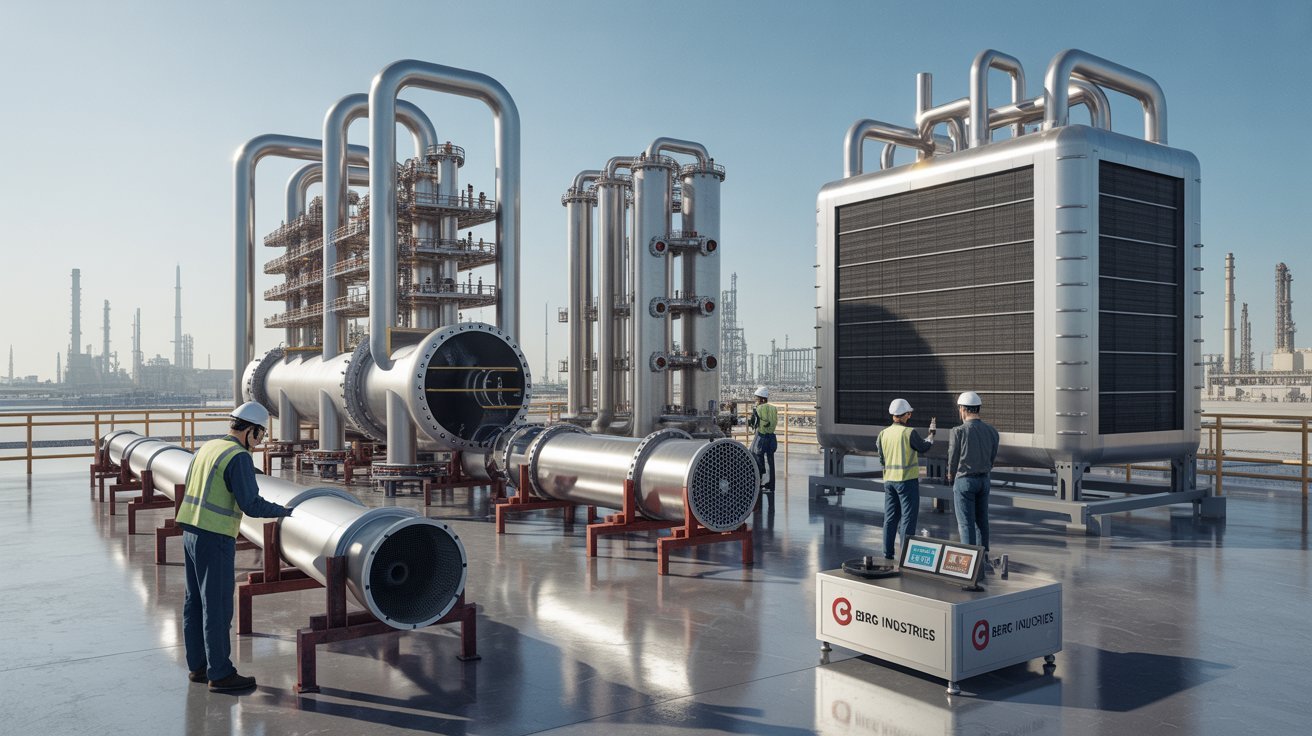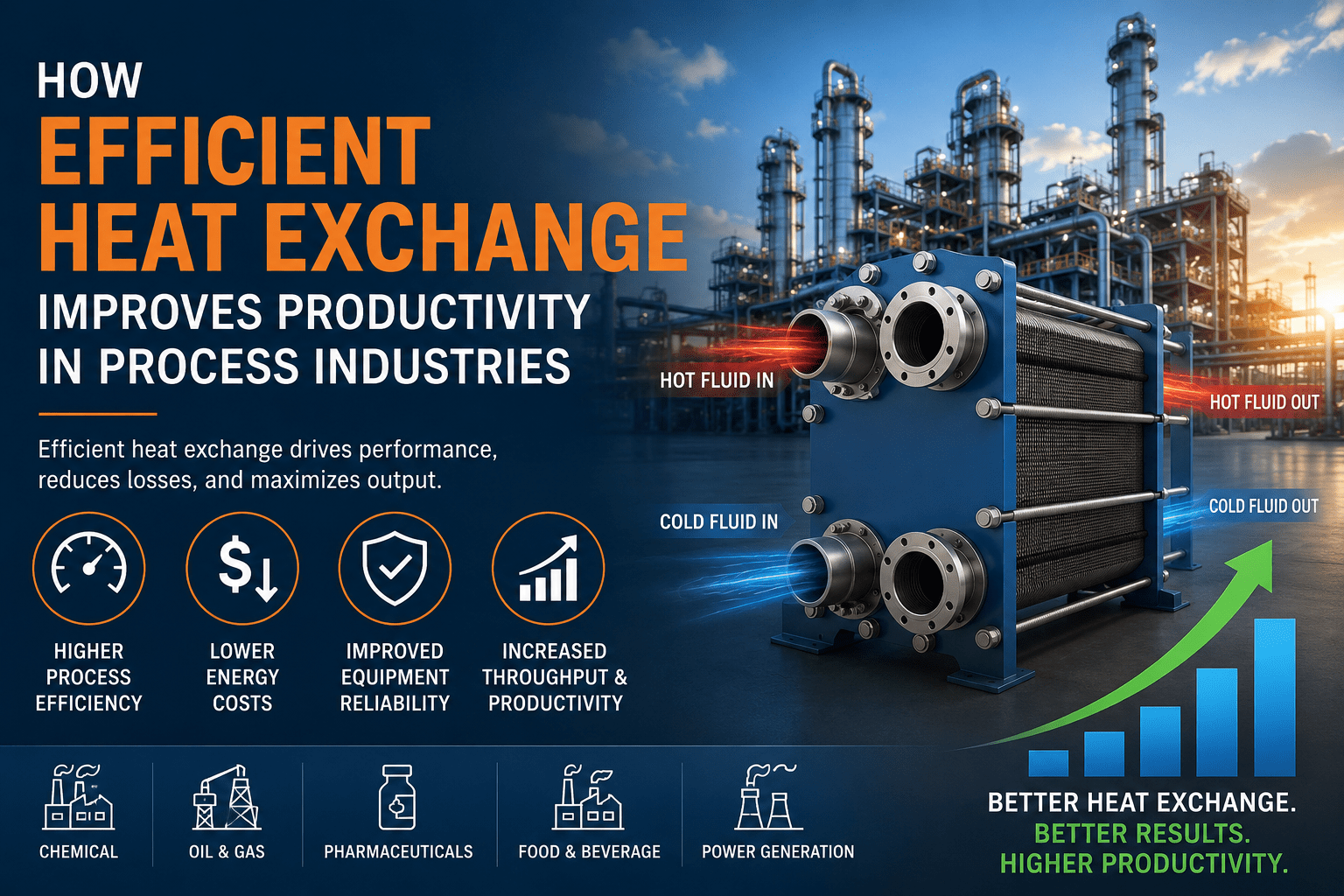
The process of heat exchange is among the most fundamental processes that run underneath in modern industry. If a plant refines crude oil, makes chemicals, creates electricity or processes food and food products, the transfer of energy through the processes determines the efficiency with which the whole process runs.
For the process industries of throughout the Middle East, working with a dependable Heat Exchangers Manufacturer in UAE will be an important move that has long-term implications for the performance of the plant, energy consumption and the reliability of equipment.
What Heat Exchange Actually Does in a Process Plant
In its essence it involves the control of transfer energy from one gas stream to another without the two streams having direct contact. This seemingly straightforward function is the basis for the control of temperature throughout production lines.
If heat transfer is not stable, reactions can drift in the direction of separation efficiency, downstream equipment performs under pressure and energy consumption rises without a significant rise in output. Each step of a continuous operation in Heat Exchangers Manufacturer in UAE depends on the temperature being kept within precise operating time frames.
If heat exchange is performing effectively, the entire plant is benefited. Rates of flow are stabilized as well as the quality of the product is maintained and operators can have less to do managing the process and spend more time operating the process in accordance with their specifications.
How Thermal Efficiency Translates to Productivity
The relationship between the heat exchanger’s performance and overall plant productivity is clear and quantifiable.
Stable Process Temperatures Drive Consistent Output
Industrial processes that are operating at the correct temperature result in output that is predictable and at acceptable quality levels. If thermal control is not maintained the product’s variability is increased the rework rate increases and throughput decreases. Efficient heat exchanger companies designs ensure stable temperature that keeps lines operating at their maximum capacity.
Energy Recovery Reduces Operating Costs
A large portion of thermal energy that is present in a process stream could be used to generate energy and redirect it elsewhere instead of being lost. High-performance heat exchangers are able to capture the energy and then use it in other processes and reduce the dependency of the facility on cooling and heating sources. In the long run the savings on utilities and fuel are significant.
Reduced Fouling Means Fewer Interruptions
The gradual accumulation of deposits on the surfaces of heat transfer is among the most frequent reasons for declining exchanger performance. As the fouling process progresses the efficiency of heat transfer drops and pressure drops increase and eventually the unit needs to be cleaned or replaced. Equipment that is designed to reduce fouling as a top priority can extend the interval between maintenance activities and keeps production going for longer without interruption.
The Engineering Behind High-Performance Heat Exchangers
A heat exchanger’s performance exchanger over the course of its lifetime is mostly determined by the decisions made at the design and fabrication phase. This is the reason why the capabilities of the heat exchanger manufacturer are as important as the specs of the device itself.
The right design of the static equipment manufacturer begins with a deep understanding of the conditions the equipment will be exposed to. Operating temperatures, pressures, flows rates, fluid characteristics along with the availability of fouling or corrosive media all impact the selection of material as well as geometry and the construction techniques.
Heat exchanger companies which invest in an accredited fabrication infrastructure and skilled engineering teams create equipment that provides its advertised performance in a consistent manner, instead of declining rapidly under harsh operating conditions.
Regional Considerations for UAE Process Industries
The operational environment of the UAE and across the GCC has particular problems that the general equipment choices often fail to consider. Temperatures in the air can influence air-cooled designs as well as cool water cooling systems. Humidity-related cycles can affect the corrosion process on exterior surfaces. The processes media that are common to Gulf industries, such as the sour crude stream along with high-salinity waters and chemical compounds that can be aggressive have particular requirements on the selection of materials.
A heat exchanger manufacturer in UAE with real regional expertise can see these aspects during the design phase and not as a last-minute thought. This means equipment is in tune with actual conditions rather than hypothetical ones, with the material’s grades, connections standards, and documentation for inspection conforming to local regulations.
Static Equipment as an Integrated System
Heat exchangers make up a component of a larger static equipment ecosystem in any process plant. They function alongside columns, pressure vessels, reactors, separators, and pressure vessels. Each component’s performance affects the capacity and performance of every other component that is connected to it.
A single vendor can act as a pressure vessel manufacturer in Dubai as well as heat exchanger manufacturer It eliminates the inconsistencies that result when multiple suppliers supply interconnected equipment. Material consistency, design compatibility as well as alignment of documentation and the uniformity of quality systems all improve when equipment used for static production is procured from a single manufacturing facility.
Plant operators benefit from this because it minimizes the risk of a miscommunication during commissioning, and simplifies maintenance and inspection management. The procurement team helps consolidate the supplier relationship and accountability.
Picking a skilled manufacturer of static equipment who can handle the entire range of fabrication of process equipment is an efficient method of reducing complexity and improving longevity of reliability throughout the entire plant.
Bottom Line
Effective heat exchange is not an issue that is only a minor aspect of the processes industry. It is the primary element of how efficiently the plant is operating as well as how consistently it meets the output goals and how effectively it handles the operational and energy costs throughout its life span.
Selecting the most suitable manufacturer of heat exchangers in the UAE abd pressure vessel manufacturer in Dubai is an option that extends well beyond the purchase order. It affects the performance of the plant over many years of operation. Berg Industries brings the capabilities of engineering, fabrication standards, and local knowledge that industries in the process throughout the UAE require, and provides static solutions for equipment designed to meet actual operational conditions, and for long-lasting reliability.
Frequently Asked Questions
What is the impact of heat exchangers and how does it impact the overall energy consumption?
When properly designed and measured, exchangers are able to recover usable thermal energy from the process stream and reduce the energy consumption required for heating and cooling. This reduces the use of fuel and utility bills throughout the entire operating cycle of the facility.
What certifications the manufacturer of heat exchangers in UAE have relevant certifications?
These comprise ASME Standards for Pressure Equipment, ISO quality management systems and compliance with local UAE regulations. PED compliance could also be required when equipment is exported into European markets or specifically requested by international customers.
In what situations is it better replacing a heater rather than to keep it running?
When an item has suffered frequent failures, severe erosion or corrosion, persistent pollution that is difficult to remove or if its design is not appropriate to the current processes generally, replacing the unit will provide more value over the long run than maintenance.
What's the function of pressure vessels in conjunction with heat exchangers within process plants?
Pressure vessels are used to store, separate or mix process fluids under control pressure conditions. They function in conjunction with heat exchangers to regulate the temperature and pressure throughout the process. Additionally, their performance directly impacts the load of heat that downstream exchangers are required to manage.