It is not something that industries discuss. It doesn’t matter if it’s a petrochemical facility that runs continuous processes or a data center that is able to meet uptime obligations and a site for construction running vital devices, the engine that runs the process is only as reliable as the enclosure it is surrounded by. But the generator enclosures engineering is frequently undervalued. An enclosure that isn’t able to handle the heat, is not able to meet noise standards or can’t withstand the working environment could compromise even the best-specified generator under it.
Understanding the difference between an enclosure that is high-performance from a less-than-perfect one begins by understanding the engineering principles that are required to construct it properly.
Thermal Management as a Primary Design Constraint
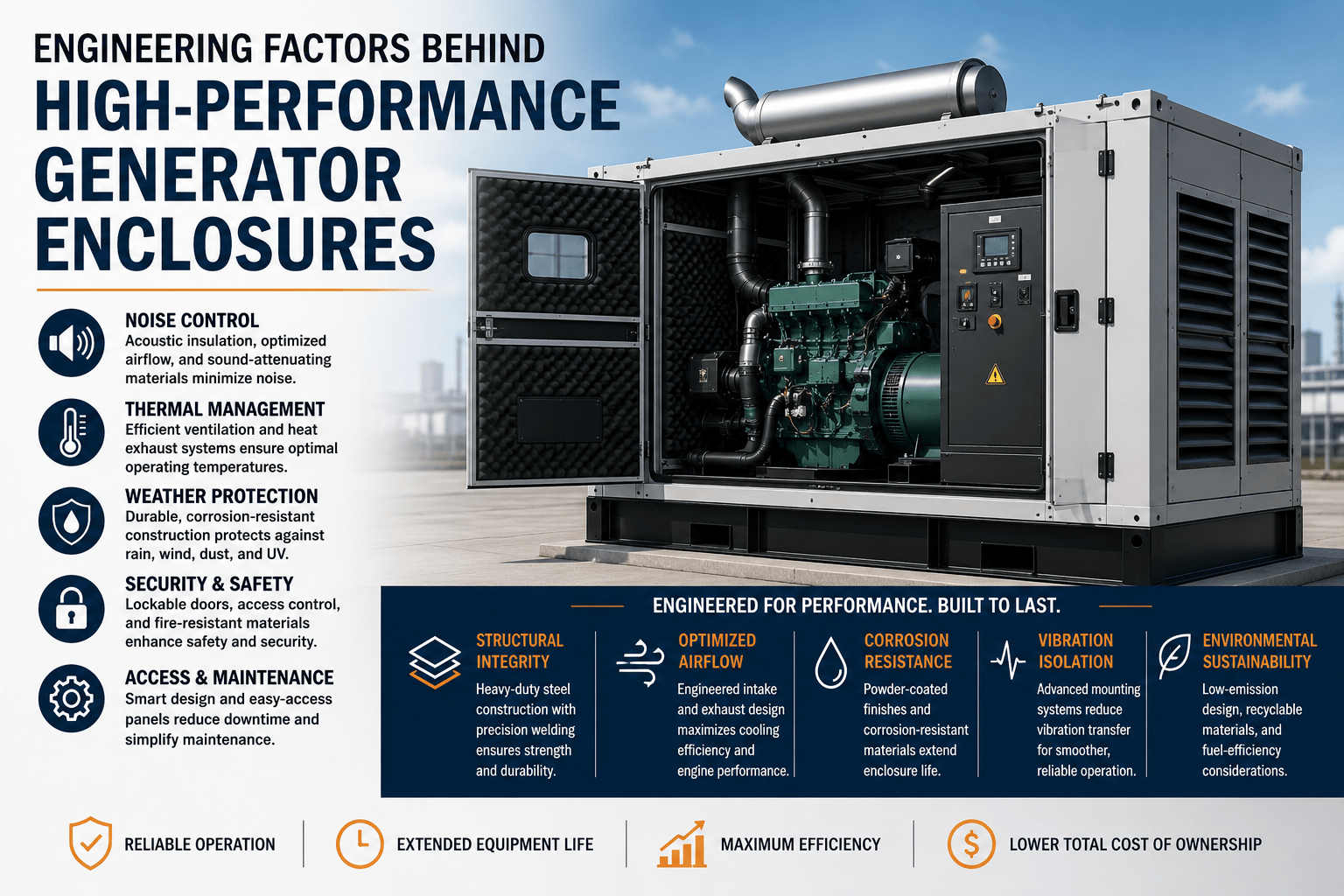
The most constant threat to generator performance is heat. danger to generator performance and endurance. Generators operating at full capacity generates significant radiating and exhaust heat. Without a well-engineered ventilation system, the heat is absorbed within the enclosure, causing it to raise temperatures in the vicinity of the alternator and engine to the acceptable limit.
The effects are tangible. Higher operating temperatures cause the degrading of insulation in alternator winds and reduce the viscosity of engine oil performance and cause thermal shutdowns at precisely the times when uninterrupted power is the most crucial.
Leading Generator enclosures manufacturers UAE create ventilation systems that are based on their heat rejection information and not based on airflow assumptions that are generic. This means that they must calculate inlet and exhaust zones to ensure the required air changes per hour.
Acoustic Engineering and Regulatory Compliance
Industrial generators are noisy. A huge diesel generator set running without acoustic treatment could be more than 100 decibels at a metre. In the vicinity of urban sites, close to housing areas or in structures that are subject to the occupational regulations for noise levels, the output isn’t acceptable.
Acoustic attenuation within an enclosure for generators is an engineering task and is not just a matter of installing foam linings to the interior panels. Effective noise reduction involves analysis of the generator’s power levels across different frequency bands, the selection of suitable material for acoustic barriers, the construction of panels in order to stop resonance transmission, and paying close focus on every nook and cranny of the enclosure’s shell because the sound propagates through gaps much like air.
Technical and Modular Solutions companies that adhere to this standard approach are able to consistently provide enclosures with 25 dB, 35 dB or higher levels of attenuation based on the specifications of the project.
Structural Integrity for Gulf Operating Conditions
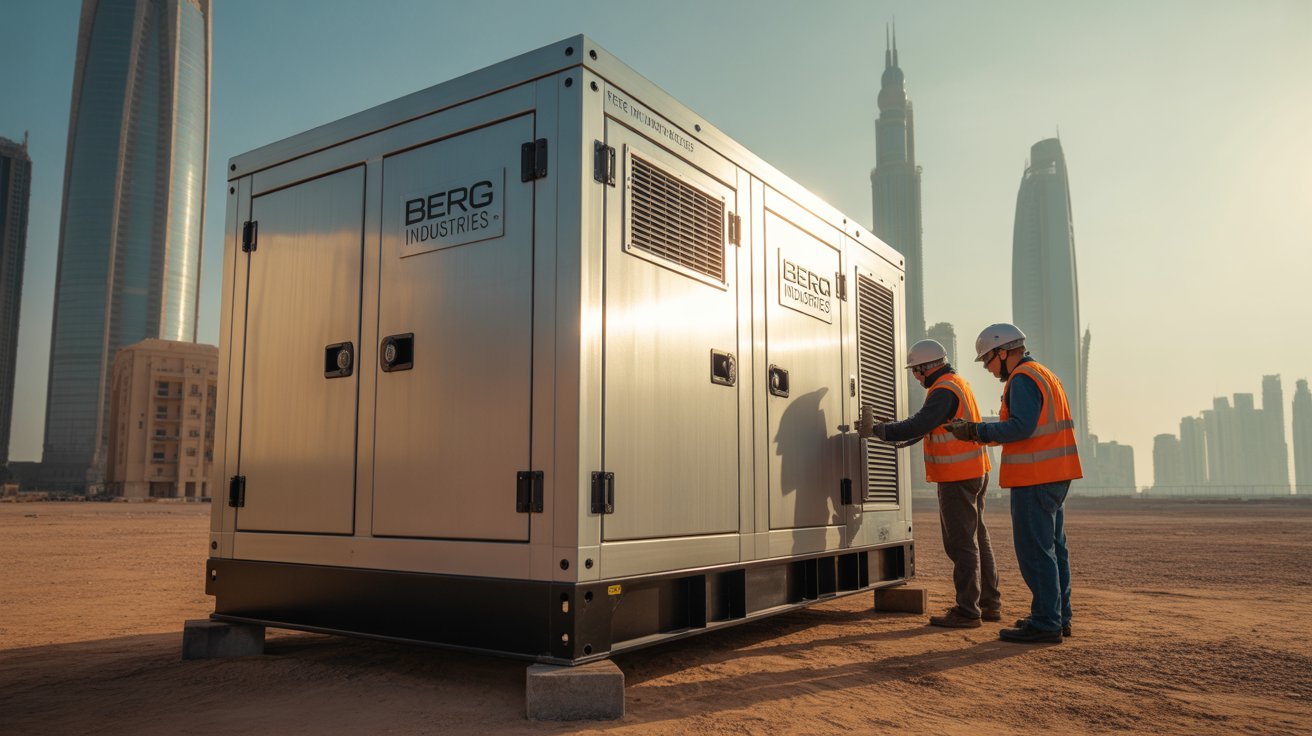
The Gulf climate creates conditions that enclosure structures have to be designed specifically to endure. Ambient temperatures regularly exceed 45 degrees Celsius. Humidity levels close to coastal sites make for a harsh corrosion environment. Sandstorms release fine particles which can cause damage to seals, blockages filters, and speeds up wear on moving components.
An enclosure with high performance will not be an old-fashioned container with panels bolted onto. Switchgear enclosures Manufacturer UAE capabilities which translate into generator enclosure design require structural steel sections designed for specified load conditions hot-dip galvanized, epoxy-coated or hot-dip finishes that are specifically designed for the application environment sealable panel joints using gaskets that are rated to withstand the anticipated temperature as well as UV exposure cycle and air inlet filtration designed to control airflow and particle exclusion.
Integration with Electrical and Control Systems
Generator enclosures cannot exist on its own. It should be integrated with its control panel automatic transfer switch and fuel management system, the remote monitor infrastructure and, in some instances, the wider E-House/E-rooms as well as Modular Tech Buildings (E House) architecture of the facility it is serving.
This requires that the manufacturer of the enclosure understand the electrical requirements of the system as well as fabrication processes. Electrical houses Manufacturer experiences are directly relevant in this. Businesses that make complete electrical buildings provide the perspective of a system-level enclosure design that fabricators are unable to duplicate. They are aware of how enclosures function as a part of a larger electrical infrastructure, not only as a barrier to weather around a generator set.
Service Access and Maintenance Design
Long-term generator performance depends on consistent, effective maintenance. A device that hinders routine maintenance is eventually not maintained properly and the negative effects on reliability of not ensuring generator maintenance are well-known throughout the business.
High-performance enclosure designs account for access to services from the initial layout drawing. This includes locating access doors to be aligned with those for servicing the engine, ensuring enough clearance for filter change and oil draining operations and belt inspections.
Generator Enclosures manufcturers UAE that have supplied units across a variety of projects and operating environments have gained practical experience of how service access performs in the field, versus what appears to be sufficient on a sketch. This operational knowledge can be directly incorporated into better design decisions for every subsequent project.
Final Words
Generator enclosures are precise engineering solution that can be delivered. Acoustic performance, thermal management as well as the durability of structures, integration with electrical systems and access to services are all fields that should be systematically addressed starting from the beginning of the design phase. The projects that consider the selection of enclosures as a common purchase decision will always face consequences of this method during commissioning or, even more, in the event of an unexpected shutdown.
Berg Industries brings the engineering experience and manufacturing capability to create generator enclosures that can withstand the entire spectrum of Gulf industrial operating conditions. With in-house expertise that spans modular technical Buildings (E HOUSE) as well as switchgear enclosures and the complete Technical and Modular Solutions, Berg Industries is the ideal partner for project managers and EPC contractors who are unable to sacrifice reliability of the power infrastructure.
Frequently Asked Questions
What is the acoustic attenuation calculated for generator enclosures?
The requirements for acoustic attenuation are defined by the generator's sound power output, rules for noise at the site, distance from sensitive receptors, as well as operational hours. Engineers evaluate these parameters and choose the appropriate panel materials, seals and structural treatment in accordance with.
What is the significance of access to services for enclosure designs?
Inaccessible service points lead to delayed maintenance, which directly decreases the reliability of generators and the time to operational. Closures that are designed to provide access to all points of service enable routine maintenance to be completed quicker, safer, as well as more probable to be completed in time.
How do modular electrical structures are related to generator enclosures?
Generator enclosures are often an element of a larger modular power infrastructure, which includes control buildings, switchgear rooms as well as E-House installations. Companies that have experience in fully modular electrical buildings can bring valuable information on system-level integration for isolated enclosure projects.
What certificates should a manufacturer of generator enclosures have?
Important certifications for the project include ISO 9001 for quality management as well as the compliance to IEC Standards for enclosures made of electrical materials, as well as Acoustic testing certifications. UAE project requirements could be accompanied by ADNOC, DEWA, or SEWA compliance based on the final-use industry and the client.