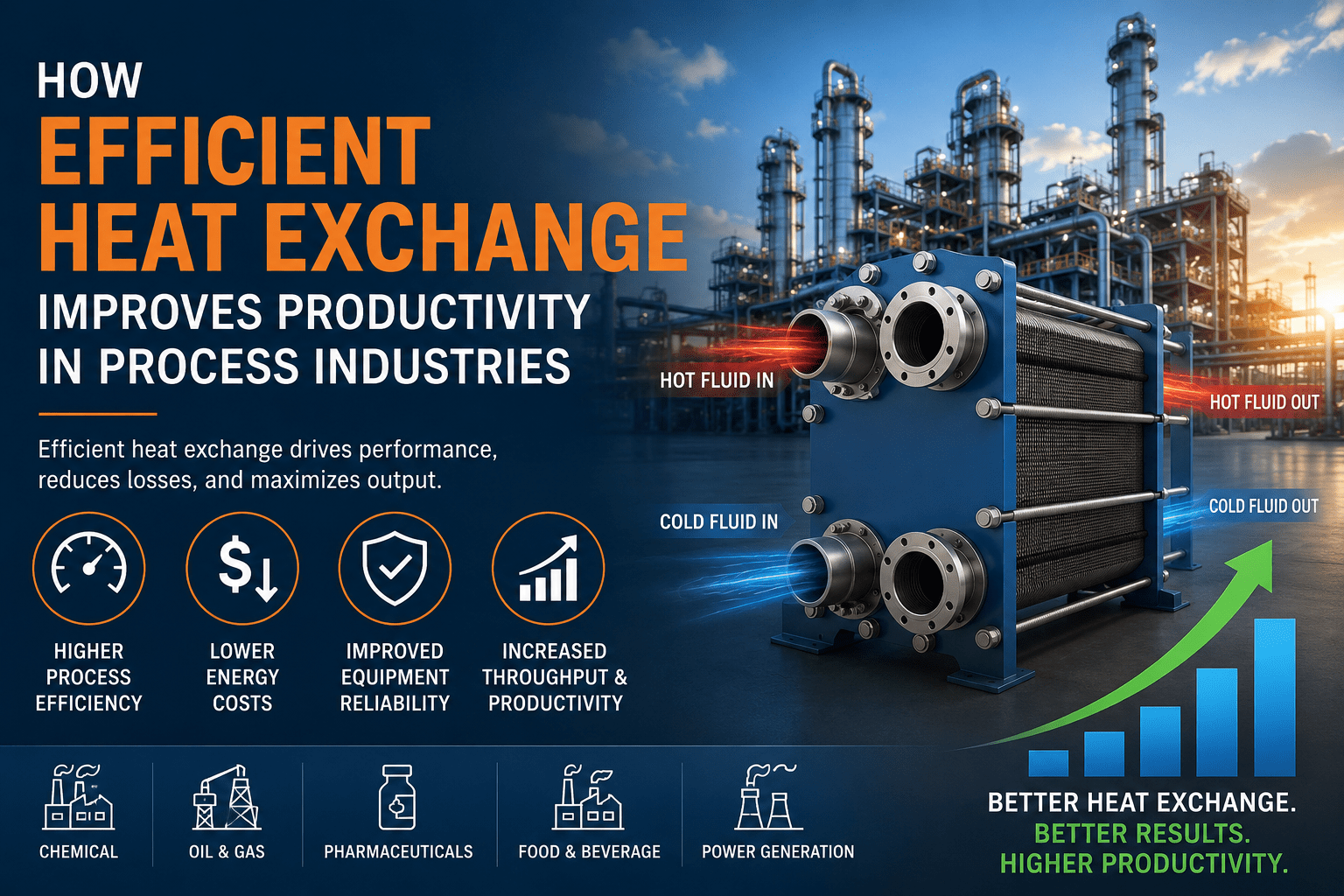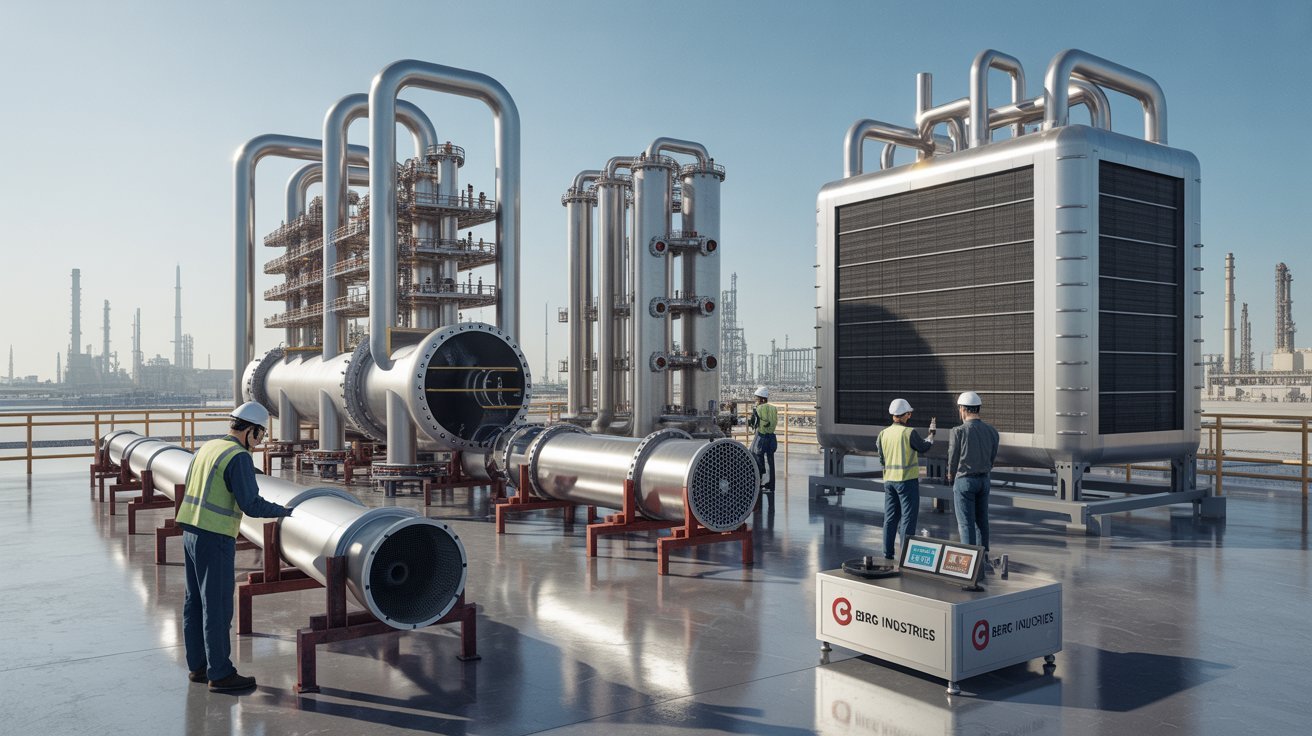
Heat exchangers play a vital role in industries that rely on temperature control and energy transfer. In the UAE, industrial growth is moving fast. Because of this, demand for high-quality heat exchangers continues to rise across oil and gas, power generation, chemicals, food processing, and HVAC sectors.
Choosing the right Heat Exchangers Manufacturer in UAE directly affects efficiency, safety, and long-term operating costs. The region has many suppliers and fabricators. Not all offer the same level of quality or reliability.
This guide explains the key points clients should review when starting a new project or upgrading an existing system. It also shares insights into the UAE market so you can select a manufacturer that meets strict industrial needs.
What is the Role of Heat Exchangers in Diverse Sectors in the UAE
Many advanced industrial systems in the UAE depend on heat exchangers. These systems rely on heat transfer between fluids to maintain stable operating conditions.
Industries such as oil refining, petrochemicals, desalination, and power generation require continuous and stable performance. The UAE’s hot climate adds further pressure on equipment. Heat exchangers must be strong, efficient, and able to handle extreme temperatures. This makes the choice of manufacturer a critical decision.
What is the Criteria For Selecting The Heat Exchangers Manufacturers in the UAE
1. Manufacturing Expertise and Experience in the Industry
A reliable static equipment manufacturer in the UAE should have strong knowledge of thermal design, metallurgy, welding, and fabrication. This experience matters because heat exchangers are rarely standard products. They are often designed for specific process conditions.
2. Certification and Compliance with International Standards
Heat exchangers used in high-risk industries must meet ASME, TEMA, API, and ISO standards. These certifications confirm quality in materials, welding, testing, and assembly. Clients should verify that approvals are current and suitable for the intended application.
3. Custom Engineering Capabilities
Many UAE industries operate under unique pressures, temperatures, and corrosion risks. A capable manufacturer should offer custom-built heat exchangers instead of only standard models.
Clients often prefer a static equipment manufacturer UAE that can also supply pressure vessels, tanks, and other fabricated components. This ensures better system integration.
4. Material Selection and Durability
UAE industries face harsh conditions such as high salinity, corrosive chemicals, and extreme heat. Material choice is therefore critical. Common materials include stainless steel, duplex alloys, copper-nickel, and titanium.
A dependable supplier must source high-grade materials and perform proper testing. This helps extend equipment life and reduce failure risk.
5. Fabrication Technology
The performance of a heat exchanger depends on the build quality. Modern manufacturers typically use:
– Automated welding
– CNC cutting
– Tube sheet drilling
– Hydrostatic testing
– Radiographic and ultrasonic testing
These methods help the equipment maintain strength during repeated heating and cooling cycles. Choosing an industrial heat exchanger supplier in the UAE with advanced fabrication methods adds long-term value.
6. Service and Support Maintenance
Heat exchangers need regular cleaning, inspection, and part replacement. A dependable manufacturer should offer spare parts and ongoing service support. Clients should check whether long-term service contracts and emergency repair support are available.
7. Availability and Reliability When It Comes to Delivery
Large industrial projects often run on tight schedules. Many also require multiple units. Manufacturers must have the capacity, manpower, and planning ability to meet deadlines.
Local manufacturing in the UAE improves communication, coordination, and delivery speed compared to overseas suppliers.
8. Cost Impact and Future Value
Even though pricing in the market for industrial heat exchanger supplier UAE is essential, clients must assess the entire life cycle cost and not just the purchase price. Ineffective heat exchangers may incur higher costs through premature failure, higher energy costs, and increased maintenance. Value engineering correlates with lower cost and quality over the long term.
UAE Market for Heat Exchangers
As the UAE expands its industrial base, local manufacturers are investing in better technology, stronger quality systems, and improved engineering practices. The push for industrial self-reliance has strengthened partnerships between major projects and local fabricators.
UAE-based manufacturers understand local regulations, climate conditions, and project expectations. This allows them to deliver well-suited solutions at competitive costs.
A strong static equipment manufacturer in the UAE can also supply pressure vessels, tanks, piping spools, and heat exchangers from one source. This reduces coordination effort and simplifies project management.
What are the Advantages of Choosing an Industrial Heat Exchanger Supplier in UAE
Working with a local manufacturer offers several advantages:
1. Shorter Lead Times
Local production reduces shipping delays and improves scheduling flexibility.
2. Better Understanding of Local Requirements
Manufacturers understand UAE operating conditions and regulatory needs.
3. Skilled Workforce Availability
The UAE has a well-trained engineering and technical workforce that follows international standards.
4. Stronger Quality Control
Clients can visit fabrication sites and carry out inspections during production.
5. Reliable After-Sales Support
Local suppliers can respond faster to service and maintenance needs.
These benefits support long-term system performance and operational stability.
What are the Common Types of Heat Exchangers Manufactured in the UAE
Professional heat exchangers manufacturer in the UAE typically produces:
- Shell and tube heat exchangers
- Plate heat exchangers
- Air-cooled heat exchangers
- Finned tube exchangers
- Condensers and evaporators
- Double pipe heat exchangers
Selection depends on temperature, pressure, fluid type, and space limits.
Bottom Line
Industrial performance, equipment life, and operational reliability depend heavily on choosing the right heat exchanger manufacturer in the UAE. Clients should assess experience, material quality, engineering strength, and after-sales support. Berg Industries is one of the trusted partners for projects that demand precision, durability, and full compliance with international standards.
FAQs
Why is selecting a static equipment manufacturer UAE advantageous for larger undertakings?
A static equipment manufacturer in the UAE offers pressure vessels, heat exchangers, tanks, and associated equipment. This unifies the sophistication of engineering and the simplicity of management for the client and ensures that all the components meet the required engineering and technical specifications.
How does an industrial heat exchanger supplier UAE sustain long-lasting durability?
Industrial heat exchanger suppliers sustain long-lasting durability through the rigour of strict fabrication and high-grade metals industry standards. Hydrostatic, ultrasonic, and Radiographic inspections provide robust engineering of the equipment to ensure the desired performance is met.
Do locally manufactured heat exchangers fit the UAE's industrial climate?
Certainly, local manufacturers, having designed heat exchangers for the UAE's high temperatures, high salinity, and extreme conditions, have advanced fabrication and corrosion-resistant materials to ensure the equipment meets long-term, reliable operational expectations.